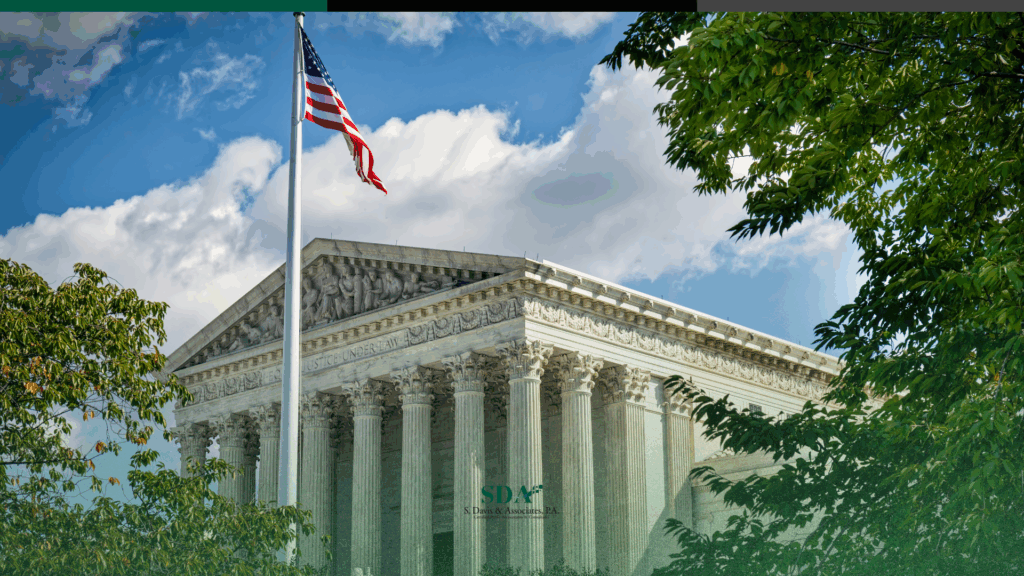
Recent Supreme Court and appellate court decisions have highlighted the delicate balance between protecting religious freedom and maintaining constitutional neutrality in public institutions. These rulings clarify the scope of the Free Exercise Clause and the Establishment Clause, impacting parents, religious organizations, and public schools. Here’s a detailed look at four key cases shaping the current legal landscape for religious rights in the United States.
Expanding Religious Rights: Free Exercise Cases
Mahmoud v. Taylor (145 S. Ct. 2332)
In a 6-3 ruling, the Supreme Court found that Montgomery County, MD, public schools imposed a substantial burden on the free exercise of religion by requiring elementary students to participate in certain sexuality and gender-identity curriculum. Parents argued that exposure to this content conflicted with their religious beliefs, while the school cited administrative burdens and exposure to diverse viewpoints. Justice Alito noted that the combination of moral messaging, institutional reinforcement, and refusal to accommodate religious objections crossed the constitutional line. The ruling strengthens parental rights where compulsory exposure conflicts with sincerely held religious convictions.
Catholic Charities Bureau v. Wisconsin Labor & Industry Review Commission (145 S Ct. 1583)
The Court unanimously held that Wisconsin violated the Free Exercise Clause by denying a religious organization an exemption from state unemployment compensation requirements. This decision underscores that the Free Exercise Clause protects religious institutions from being unfairly burdened by generally applicable state regulations.
Limiting Government Endorsement: Establishment Cases
Oklahoma Statewide Charter School Board v. Drummond (145 S. Ct. 1916)
In a 4-4 split, the Supreme Court left in place the Oklahoma Supreme Court’s ruling that prohibited state funding for a religious charter school. While proponents argued that denying access violated the Free Exercise Clause, the court emphasized that publicly funded schools are considered state actors, and public funding cannot endorse a specific religion. This decision reflects ongoing tensions between expanding access to public education funding and adhering to the Establishment Clause.
Rev. Roake v. Brumley (141 F.4th 614, 5th Cir.)
The Fifth Circuit unanimously found that a Louisiana law requiring all public schools to display the Ten Commandments violated the Establishment Clause. The court highlighted that the display promoted a religious purpose rather than an educational one, reinforcing constitutional barriers against government endorsement of specific religious beliefs in public schools.
Together, these rulings illustrate the ongoing effort to balance the Free Exercise and Establishment Clauses of the First Amendment. While the Free Exercise Clause safeguards individuals and organizations in practicing their faith, the Establishment Clause prevents government endorsement of specific religious beliefs. Courts must navigate these clauses carefully to protect religious liberty without compromising constitutional neutrality. Understanding these decisions is crucial for parents, educators, and religious organizations as they navigate complex intersections of faith, education, and public policy.